
Most buyers want one number. Here it is, with the caveat that matters more than the number itself.
Effective property tax rates in Lake Geneva run around 1.1 percent of market value, and the Walworth County median sits near 1.07 percent. On a $500,000 home that is roughly $5,000 to $5,500 a year, or $420 to $460 a month.
Now the caveat. Across Walworth County, published effective rates range from about 0.77 percent in Fontana to 1.80 percent in Sharon. That is more than double, for homes in the same county, often within a twenty-minute drive of each other. The municipality and school district you land in matters as much as the price you pay.
How a Wisconsin tax bill is actually built
Your bill is not one rate. It is a stack of separate levies applied to your assessed value, then reduced by state credits.
The Walworth County Treasurer publishes the full mill rate table every year, broken out by municipality. For the 2024 tax year in the Town of Geneva, the components looked like this:
- Walworth County: 0.00262
- Town of Geneva: 0.00156
- Lake Geneva J1 School District: 0.00461
- Lake Geneva-Genoa City Union High School: 0.00261
- Gateway Technical College: 0.00061
- Less the School Levy Tax Credit: 0.00147
The school districts are the largest single driver, which is why two similarly priced homes a few miles apart can carry very different bills. A sanitary district or other special charge may apply on top.
Check the current year's table rather than assuming last year's figures hold. Levies move.
Why the parcel record beats any percentage
Use the rate above to size a search, then stop using it.
Before you write an offer, pull the current tax bill for the exact parcel. Read the whole document: assessed value, credits applied, special charges, and recent history. The asking price is a market opinion. The tax bill is a property record, and it is the only number that reflects the actual home.
If one bill on your short list looks unusual relative to the others, ask why before you offer, not after.
When the bill comes due
Walworth County lists January 31 as the full-payment deadline. Where a bill allows installments, the first is due by January 31 and the second by July 31.
Your closing statement allocates taxes between buyer and seller for the sale year, but the next full bill still needs a place in your cash flow. Set money aside monthly whether or not you plan to pay in installments.
Paying in full versus installments
Pros of paying in full by January 31
- One deadline to track instead of two
- No risk of a missed second installment triggering interest and penalties
- Simpler if you are away from the property for stretches
Pros of using installments
- Keeps roughly half the annual cost available until midsummer
- Useful when a January closing has already consumed reserves
- Spreads the burden across two budget cycles
Watch for
- Installment availability and where each payment goes can differ by municipality
- A late installment can accelerate the full remaining balance
- Confirm the specific procedure with the local treasurer, not a general rule
The credits, and what not to assume
The Wisconsin Department of Revenue distinguishes three that show up on Walworth County bills:
- School Levy Tax Credit applies to all taxable real property. It is already reflected in the mill rate table above.
- Lottery and Gaming Credit may apply when a Wisconsin resident owns and uses the home as a primary residence. This is the one second-home buyers most often assume incorrectly.
- First Dollar Credit may apply where the parcel contains a real property improvement.
Do not copy the seller's tax outcome. If a seller claimed a credit tied to primary residence and you are buying a weekend place, your bill will differ. Review the bill and Wisconsin's official credit guidance with the appropriate professional before you build it into a budget.
Build the whole ownership budget
Four working lines, plus two more depending on the property.
Property taxes. The current bill, credits, special charges, and history. Your most useful baseline.
Insurance. Get an address-specific quote before your inspection period ends, and tell the agent how the home will be used: owner-occupied, second home, rented, or vacant at times. Those details change the conversation.
Utilities and care. Heating, cooling, water, sewer or septic, lawn, snow removal, and winterization. A seasonal property still needs attention while you are away.
Repair reserve. Size it to the actual condition: roof, windows, mechanicals, and on a lake property the pier, septic, and well. Ownership feels manageable when a repair is expected rather than a crisis.
HOA or condo costs, if applicable. Do not stop at the monthly figure. Read the budget, reserve balance, meeting minutes, insurance coverage, rules, and planned capital work. A low fee does not mean the association is funded for roofs, siding, or roads.
Waterfront items, if applicable. Covered next.
What changes on the water
Flood exposure. Search the address through the FEMA Flood Map Service Center and request an insurance quote matched to the home's location and use. Standard homeowners policies typically do not cover flood damage. A map result is a starting point, not an answer. Ask about prior claims, deductibles, elevation information, and what your lender will require.
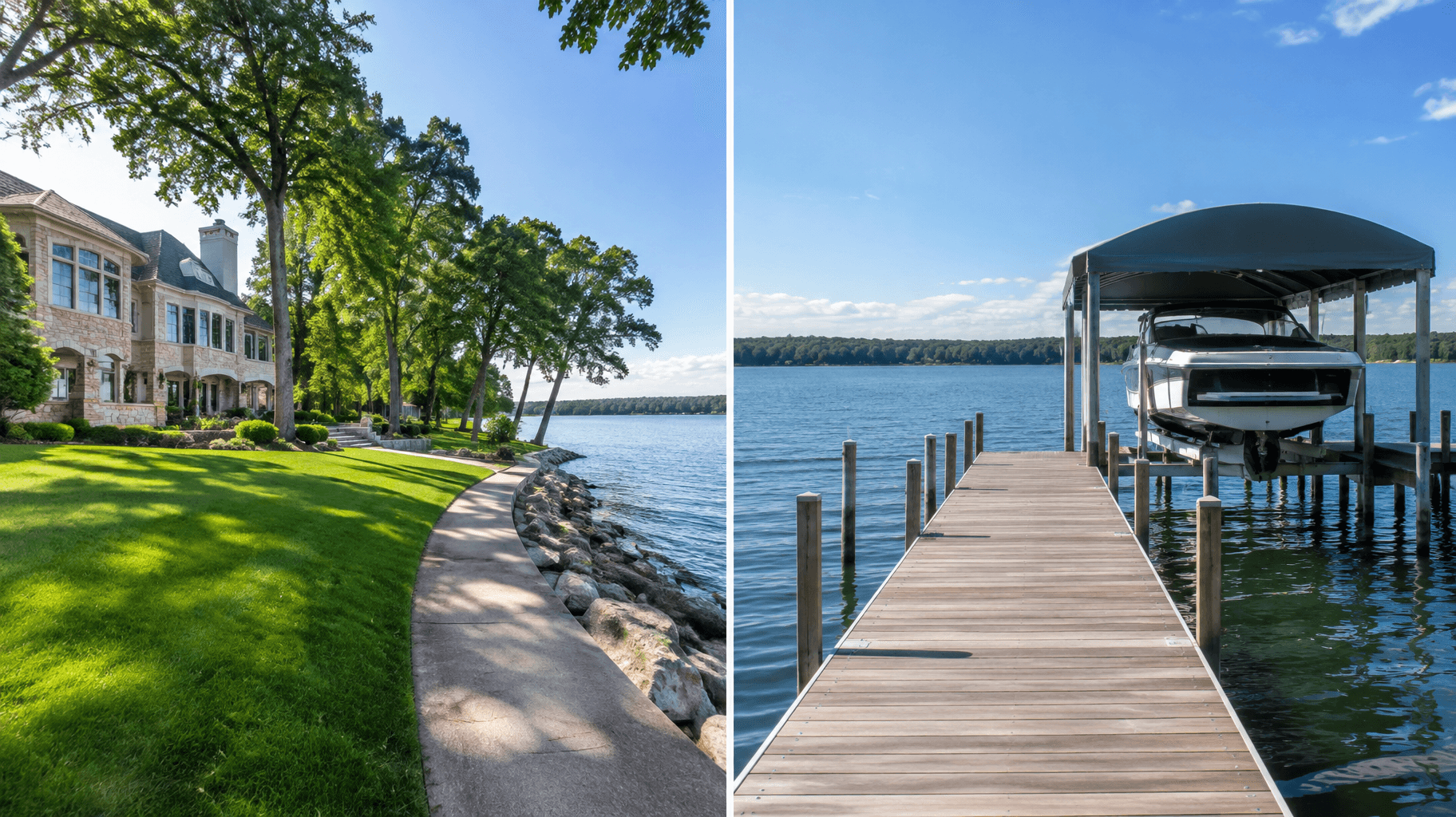
Pier and shoreline. Per Wisconsin DNR, some legacy piers may be exempt from permitting while new piers outside exemption standards can require an individual permit. Request pier documents and the current footprint, and understand that a structure that is fine today may face a different approval path if you change it.
Older systems. Use qualified inspectors for septic, well, shoreline, and structural questions rather than a general opinion.
Five steps before you offer
1. Pull the current tax bill. Read the entire document, credits and special charges included. Save a copy with your offer paperwork.
2. Confirm which credits apply to you. Primary-residence status drives some Wisconsin relief. Verify your own situation rather than inheriting the seller's.
3. Get an address-specific insurance quote. Do this before contingencies expire. It is the fastest way to surface coverage gaps, deductibles, or flood requirements.
4. Read every association and property document. For condos and lake homes, the documents explain costs that listing remarks never will.
5. Set a reserve sized to this home. Newer does not mean maintenance-free, and an older home with character needs room for periodic care.
The lower list price is not always the lower-cost home
After enough showings here, the pattern repeats: a property with newer systems, workable insurance, and a well-funded association is often cheaper to own than a bargain carrying stacked deferred work and a higher-levy school district.
Run this review while you are still searching, not after you have fallen for a house. For neighborhoods, inspections, timing, and the purchase process, read the Lake Geneva Buyer's Guide, or contact us to walk through the numbers on a specific address.
Frequently asked questions
What is the property tax rate in Lake Geneva, Wisconsin?
Effective rates in Lake Geneva run near 1.1 percent of market value, with the Walworth County median around 1.07 percent. That is a planning figure only. Rates across the county range from roughly 0.77 percent in Fontana to 1.80 percent in Sharon depending on municipality and school district, so the current bill for the specific parcel is the number that matters.
How can I estimate Lake Geneva property tax before making an offer?
Request the most recent bill, review the assessed value and credits applied, and compare it against bills for similar nearby homes. Treat that bill as your baseline and leave room for future assessment or levy changes. The Walworth County Treasurer also publishes annual mill rate tables broken out by municipality and district.
When are property taxes due in Walworth County?
Walworth County lists January 31 as the full-payment deadline. Where the bill allows installments, the first is due by January 31 and the second by July 31. Installment availability and payment procedures can vary by municipality, so confirm the specifics with the local treasurer rather than assuming a countywide rule.
Do second homes qualify for Wisconsin property tax credits?
Some credits are broad and some are not. The School Levy Tax Credit applies to all taxable real property, while the Lottery and Gaming Credit generally requires Wisconsin residency and primary-residence use. Second-home buyers frequently assume they inherit the seller's credits. Verify your own eligibility rather than copying the prior owner's bill.
Why do two similar Lake Geneva homes have such different tax bills?
School district levies are usually the largest component of a Wisconsin bill and they vary substantially across Walworth County. Add differences in municipal levies, sanitary or special districts, assessed value, and applicable credits, and two homes at similar prices can land in genuinely different places. Compare actual bills rather than percentages.
Are waterfront taxes and insurance different in Wisconsin?
The tax bill follows the same structure, though waterfront assessed values are typically higher. Insurance is where the real difference shows up. Check the address in FEMA's Flood Map Service Center, get a property-specific quote, and ask about flood coverage separately, since standard homeowners policies generally exclude flood damage.

About Jade Goodhue
Expert real estate agent specializing in Lake Geneva and surrounding areas. Helping families find their dream homes with personalized service and local market expertise.
Contact Jade Goodhue