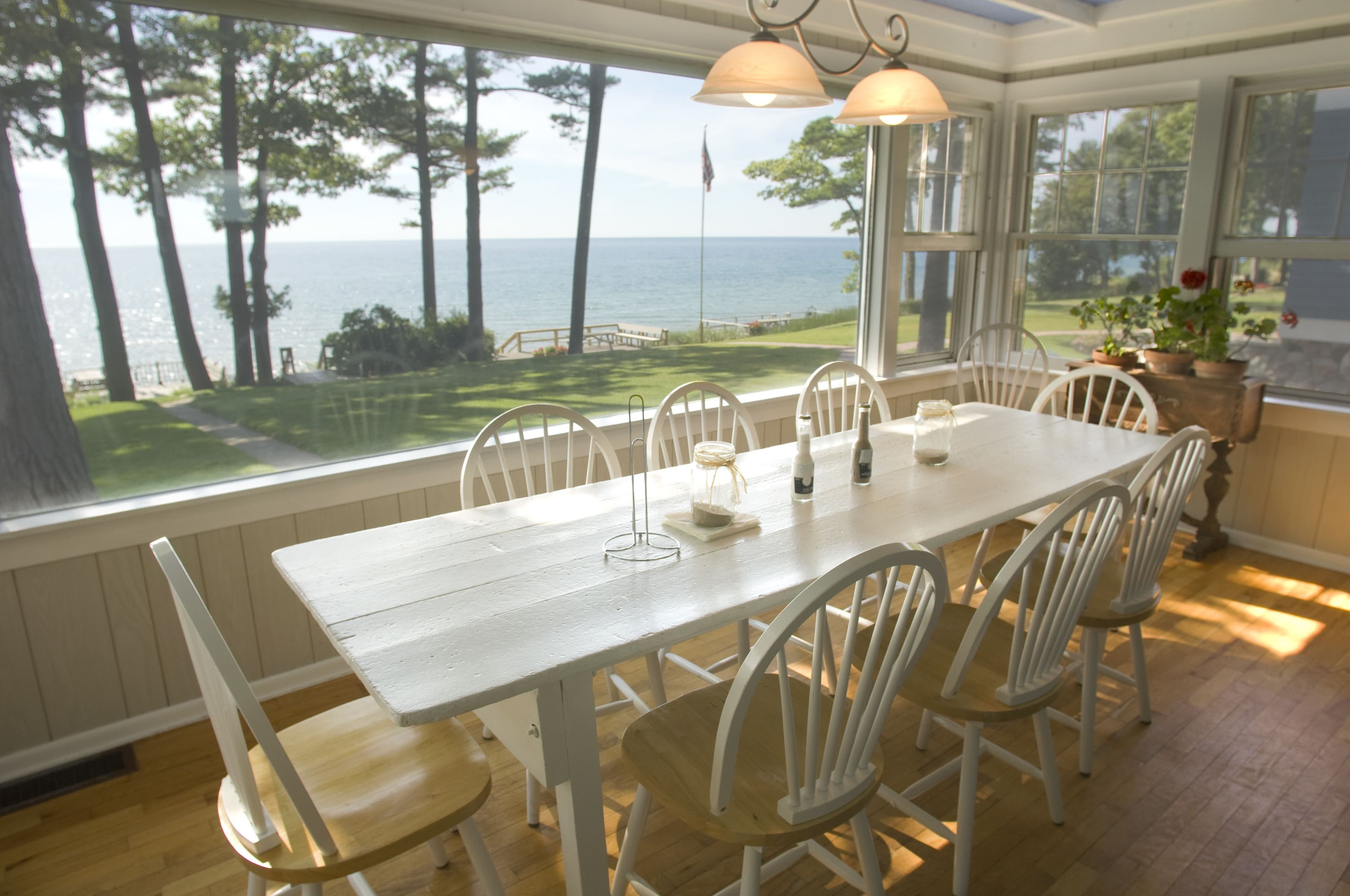

You found the lake house. The pre-approval letter says you're good. Then the lender calls back and says the loan just became a jumbo, the rate changed, and they need another six months of statements.
That call happens because a second home mortgage in Wisconsin follows different rules than the loan on the house you live in. Down payments are higher, pricing is different, and around Geneva Lake it doesn't take a trophy estate to cross the line where a normal loan becomes a jumbo.
By the end of this guide, you'll know the minimum down payment for a vacation home, exactly where the 2026 jumbo threshold sits, why second home rates run above the headline number, and a step-by-step plan to finance the right way before you write an offer.
One note up front: Legendary Real Estate Services is a brokerage, not a lender. Use this guide to ask sharper questions, then get exact numbers from a licensed loan officer.
Second Home Mortgage Wisconsin Basics: What Counts as a "Second Home"
Lenders sort every property into one of three buckets: primary residence, second home, or investment property. The bucket drives your down payment, your pricing, and whether you qualify at all.
Under Fannie Mae's occupancy rules, a second home must meet all of these conditions:
- You use it yourself for some portion of the year.
- It's a one-unit property. No duplexes.
- It's suitable for year-round living. A three-season cottage with no heat can be a problem.
- You have exclusive control of the property.
- It isn't a rental property or a timeshare. Rental income can exist, but it can't be used to help you qualify.
- No management company controls who stays there. A mandatory rental pool agreement can knock a property out of second home status.
That last point matters around the Geneva Lakes. Some associations restrict rentals entirely (Geneva National, for example, prohibits short-term rentals), while other properties are bought with rental income in mind. If you plan to rent heavily, the lender may treat the home as an investment property, which carries a larger down payment.
Government loans are mostly off the table too. FHA loans, for example, require you to live in the home as your primary residence for at least a year. For first-home options like FHA, VA, and USDA, see our Real Estate and Mortgage Guide for Lake Geneva.
How Much Is the Down Payment on a Second Home in Wisconsin?
The minimum down payment for a conventional second home loan is 10%. Fannie Mae's current Eligibility Matrix caps one-unit second home purchases at 90% loan-to-value. Put down less than 20% and you'll also pay private mortgage insurance. Jumbo loans set their own rules and often ask for more.
Here's how that compares with other property types on the same matrix:
- Primary residence: as little as 3% down (97% loan-to-value)
- Second home: 10% down minimum (90% loan-to-value)
- Investment property: 15% down minimum (85% loan-to-value)
Private mortgage insurance, or PMI, protects the lender if you stop paying. It's typically required on conventional loans with less than 20% down.
Jumbo loans are a separate world. Each lender writes its own guidelines, and larger loan amounts generally require 25% to 30% down according to Fifth Third Bank. Second homes can also require more cash reserves than a primary residence.
The Jumbo Threshold: Where Lakefront Buyers Cross the Line
A jumbo loan is any mortgage larger than the conforming loan limit. For 2026, FHFA set that limit at $832,750 for one-unit homes across most of the country. Wisconsin has no high-cost counties on FHFA's county list, so the same $832,750 line applies in Walworth, Kenosha, and every other county in the state.
The limit applies to the loan, not the price. So the real question is how much house you can buy before your loan crosses it. Here's the math at different down payments:
- 10% down: stays conforming up to about a $925,000 purchase price
- 15% down: up to about $979,700
- 20% down: up to about $1,040,900
- 25% down: up to about $1,110,300
- 30% down: up to about $1,189,600
For context, Redfin reports a median sale price of $408,783 in the City of Lake Geneva for the three months ending May 2026, up 8.4% year over year. That median includes in-town condos and smaller homes. Once you shop lake access, lake views, or frontage, prices climb quickly, and the jumbo line becomes a real planning number instead of a footnote.
Why Second Home Rates Run Higher Than the Headline Number
The rate you see on the news isn't your rate. Freddie Mac's survey showed a 6.76% average for 30-year fixed loans as of September 10, 2026. That survey tracks primary residence purchases with 20% down and excellent credit.
Second homes get priced differently because of loan-level price adjustments, or LLPAs. These are fees Fannie Mae charges lenders based on risk. Lenders usually pass them on to you as a higher rate or extra points.
According to Fannie Mae's LLPA Matrix dated September 9, 2026, the second home adjustment on a purchase depends on your loan-to-value:
- 60% or less: 1.125% of the loan amount
- 60.01% to 70%: 1.625%
- 70.01% to 75%: 2.125%
- 75.01% to 80%: 3.375%
- 80.01% to 90%: 4.125%
Buying a condo? Most condo loans above 75% loan-to-value add another 0.75% on top. Credit score adjustments stack on as well.
Jumbo pricing doesn't use this grid, and it moves around. In the Mortgage Bankers Association survey for the week ending September 4, the average jumbo rate was 6.74% versus 6.85% for conforming loans. One week later, jumbo averaged 7.03% versus 6.97% for conforming. Jumbo isn't automatically more expensive. You have to price both.
Illustrative Scenario: A Chicago Buyer and a $1,000,000 Lake-Access Home
Consider a couple from Chicago's North Shore buying a $1,000,000 lake-access home in Walworth County as a weekend place. (This is an illustrative example, not a specific client.) Many buyers make exactly this move, and the Chicago to Lake Geneva second home commute is a big reason why.
Here's how their down payment choice changes the loan:
- $100,000 down (10%): $900,000 loan. That's jumbo. They'll need a lender whose jumbo program accepts 10% down on a second home, and many won't.
- $167,250 down (16.75%): $832,750 loan, right at the conforming limit. They keep conforming pricing but pay PMI, and the second home LLPA is 4.125%, about $34,351 before it gets built into the rate or points.
- $200,000 down (20%): $800,000 loan. No PMI. The LLPA drops to 3.375%, about $27,000.
- $250,000 down (25%): $750,000 loan. The LLPA drops to 2.125%, about $15,938.
Moving from 16.75% down to 25% down cuts the second home adjustment by about $18,400. For reference only, principal and interest at 6.76% would run about $5,194 a month on the $800,000 loan and about $4,869 on the $750,000 loan. Their actual second home rate will likely be higher.
The lesson: the "minimum down payment" and the "smart down payment" are often different numbers.
Want to see which lake-area homes keep you on the right side of the jumbo line? Talk with the Legendary team before you start touring.
Conforming vs. Jumbo for a Wisconsin Vacation Home: Pros and Cons
Conforming loan pros
- Standardized Fannie Mae and Freddie Mac rules, so approvals are more predictable
- Only 10% down required on a second home
- Only two months of reserves on a second home in most cases
Conforming loan cons
- Capped at $832,750, which limits your price range
- Second home LLPAs of up to 4.125% make low down payments expensive
- PMI below 20% down
Jumbo loan pros
- Borrow well past $832,750 for frontage or larger homes
- Pricing doesn't use Fannie Mae's LLPA grid and can match or beat conforming rates
- No PMI on many programs
Jumbo loan cons
- Each lender sets its own rules, so shopping takes more effort
- Larger down payments and deeper reserves are common
- More documentation, especially for self-employed buyers
How to Finance a Second Home Near Lake Geneva: 7 Steps
- Decide how you'll use the home. Personal use only, occasional rental, or regular rental? That answer decides whether you apply as a second home or an investment property. Tell your lender the truth. Occupancy misrepresentation is mortgage fraud.
- Run the jumbo math before you tour. Take $832,750 and divide by your loan-to-value (0.90 for 10% down, 0.80 for 20% down). That's your conforming price ceiling.
- Get pre-approved specifically as a second home. A primary residence pre-approval doesn't transfer. Get quotes from at least two lenders, including one with a jumbo program.
- Line up your reserves. For most conforming second home loans, Fannie Mae's automated system requires two months of housing payments in reserve. If you own other financed properties besides your primary home, add 2% of those loan balances (for one to four properties). Jumbo lenders often want far more.
- Gather your documents early. Expect to provide two years of tax returns and W-2s, 30 days of pay stubs, two months of bank and brokerage statements, and mortgage statements for every property you already own. Self-employed buyers should add business returns and a year-to-date profit and loss statement.
- Screen the property type. Condo projects, associations with rental restrictions, and seasonal cottages can all create lending problems. Ask for association documents before your inspection period ends.
- Ask every lender these four questions:
- What is my rate and total points at 10%, 20%, and 25% down?
- How much of that pricing comes from second home adjustments?
- If my loan goes jumbo, what down payment and reserves do you require?
- Can you lock the rate, and for how long?
The Tax Angle: The $750,000 Cap Covers Both Homes
Mortgage interest on a second home can be deductible, but the limit is shared. Under IRS Publication 936, interest is deductible on up to $750,000 of combined acquisition debt for loans taken after December 15, 2017. The One Big Beautiful Bill Act made that $750,000 limit permanent.
Back to our Chicago couple. Say they already carry a $500,000 mortgage at home and add an $800,000 lake house loan. That's $1.3 million of debt, but only $750,000 counts. As a rough estimate, about 58% of their total interest would be deductible, and only if they itemize.
Starting in 2026, PMI premiums can be deducted as mortgage interest again, but that benefit begins to phase out once adjusted gross income passes $100,000. Talk with your CPA before you choose a down payment based on taxes.
Frequently Asked Questions
What is the minimum down payment for a second home in Wisconsin?
The minimum is 10% for a conventional conforming loan, because Fannie Mae caps one-unit second home purchases at 90% loan-to-value. With less than 20% down you will also pay private mortgage insurance. Jumbo loans above $832,750 follow each lender's own rules and often require 20% or more.
What is the jumbo loan limit in Wisconsin for 2026?
Any loan above $832,750 is a jumbo loan in Wisconsin for 2026. That is the FHFA baseline conforming limit for one-unit homes, and no Wisconsin county has a higher high-cost limit. The threshold applies to the loan amount, not the purchase price, so a larger down payment can keep a pricier home conforming.
Are second home mortgage rates higher than primary residence rates?
Usually, yes. Fannie Mae applies loan-level price adjustments to second homes ranging from 1.125% to 4.125% of the loan amount on purchases, depending on loan-to-value. Lenders typically pass these costs to borrowers as a higher rate or added points. Larger down payments shrink the adjustment significantly.
Can I rent out my Wisconsin second home?
Sometimes. Fannie Mae allows rental income on a second home as long as that income is not used to qualify, you use the home part of the year, and no management company controls occupancy. Association and local rules also apply. Heavy rental use may require financing the property as an investment.
Can I use an FHA loan for a vacation home in Wisconsin?
No. FHA loans require the borrower to occupy the home as a primary residence for at least one year, so they cannot be used for a vacation or second home. Most second home buyers use conventional conforming loans or jumbo loans instead, depending on the loan amount.
Is mortgage interest on a second home tax deductible?
It can be. IRS rules allow deductions on interest for a main home and one second home, but the $750,000 acquisition debt limit covers both loans combined for debt taken after December 15, 2017. You must itemize to benefit. The One Big Beautiful Bill Act made this limit permanent.
The Bottom Line on Second Home Mortgages in Wisconsin
A second home mortgage in Wisconsin starts at 10% down, but that minimum is rarely the best move. The $832,750 jumbo line, second home pricing adjustments of up to 4.125%, and a shared $750,000 tax cap all reward buyers who plan their down payment before they fall in love with a property.
Run the jumbo math, price at least two down payment levels with two lenders, and match the home to how you'll actually use it.
Ready to find a Geneva Lakes home that fits your financing, not just your wish list? Contact Legendary Real Estate Services to start with a clear plan.

About Jade Goodhue
Expert real estate agent specializing in Lake Geneva and surrounding areas. Helping families find their dream homes with personalized service and local market expertise.
Contact Jade Goodhue