
Yerkes Observatory is one of the most famous buildings in Wisconsin, and most people drive past it without ever going inside. The grounds are free, but the building is tickets-only, and popular programs sell out months ahead.
This guide covers what Yerkes Observatory is, its history, what you can see, how tours and tickets work, and how to plan a visit to Williams Bay without getting turned away at the door.
What Is Yerkes Observatory?
Yerkes Observatory is a historic astronomical observatory in Williams Bay, Wisconsin, on the shore of Geneva Lake. It opened in 1897 and houses a 40-inch refracting telescope, the largest refractor of its kind ever used. Since 2020, the nonprofit Yerkes Future Foundation has owned it and run public tours, programs, and events.
Yerkes Observatory at a Glance
Address: 373 W. Geneva Street, Williams Bay, WI 53191
Distance from Chicago: About 90 miles northwest
Grounds: 48 acres designed by the Olmsted Brothers, open sunrise to sunset
Building access: Advance ticket required, scheduled tours and events only
Phone: 262-245-5555, Monday to Friday, 9 a.m. to 3 p.m.
A Short History of Yerkes Observatory
- 1892: Astronomer George Ellery Hale becomes director of a new University of Chicago observatory funded by Chicago streetcar tycoon Charles T. Yerkes.
- 1893: The telescope mounting is shown at the World's Columbian Exposition in Chicago.
- 1897: The observatory is dedicated on October 21.
- 1921: Albert Einstein visits and is photographed with the Yerkes staff in a picture dated May 6.
- 2018: The University of Chicago closes the observatory.
- 2020: The Yerkes Future Foundation takes ownership on May 1.
- 2022: Yerkes reopens to the public.
Edwin Hubble also researched faint nebulae at Yerkes while earning his PhD, years before the Hubble Space Telescope carried his name.
5 Things to See at Yerkes Observatory
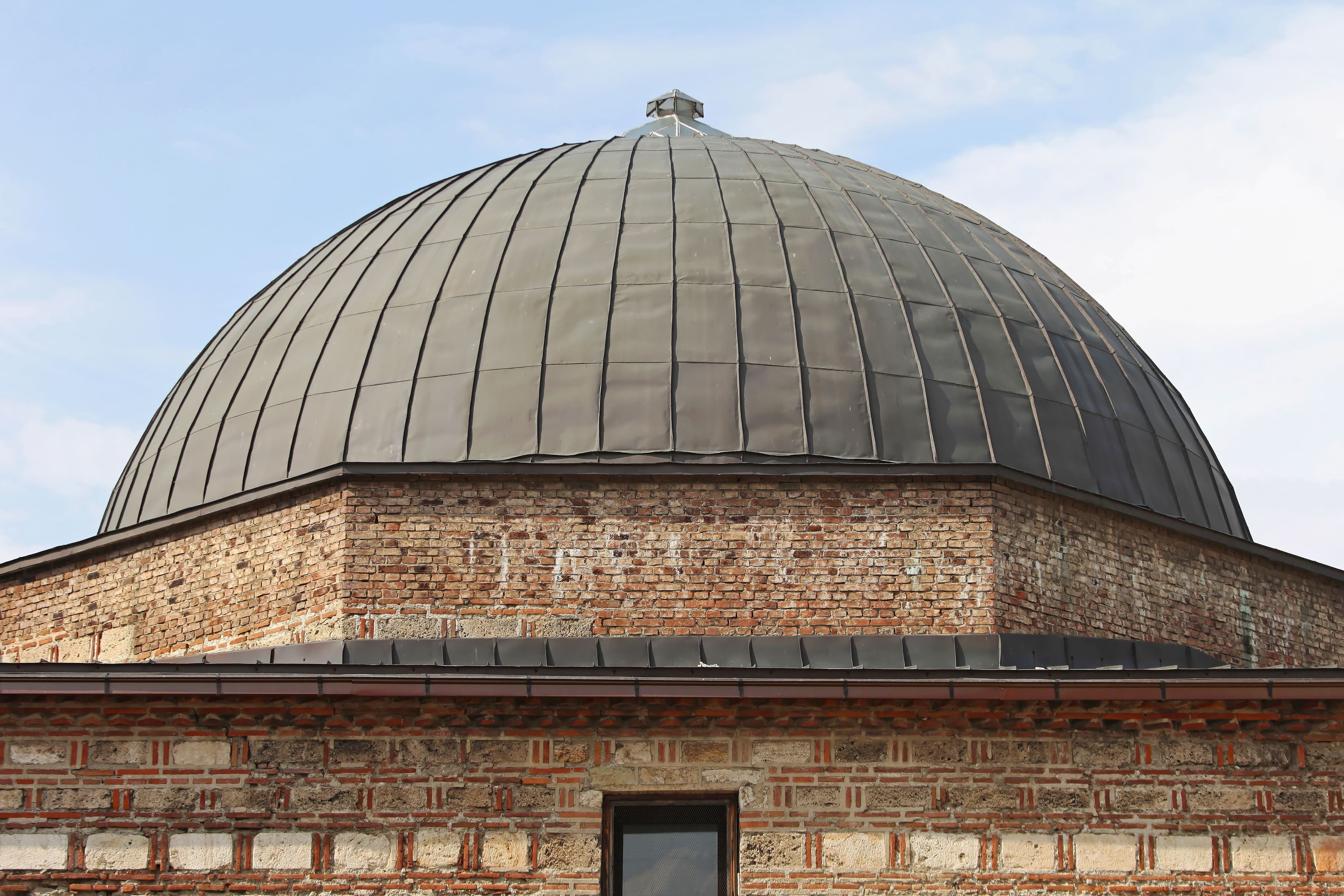
- The Great Refractor. The 40-inch telescope sits under the main dome. Lenses larger than 40 inches sag under their own weight, which is why bigger telescopes since then use mirrors instead.
- The building itself. Architect Henry Ives Cobb designed it, and the stone carvings and restored entrance rotunda are worth the tour on their own.
- The Olmsted grounds. The original elliptical drive and central lawn still frame the building, and the arboretum adds about four miles of walking and hiking paths.
- The glass plate collection. Yerkes holds 180,000 historic astronomical glass plates, one of the four largest collections in the world.
- The restoration in progress. New roofing, restored parapets, and gardens show a $76 million campaign at work, with a public stargazing deck planned for 2028.
Yerkes Observatory Tours and Programs
According to the Yerkes visit page, current experiences include:
- Space and Spaces Tour: A guided tour of the building, the domes, and its history
- Director's Hidden Spaces: A deeper tour of areas most visitors never see
- Exploring the Night Sky: An evening program with viewing through the Great Refractor on clear nights
- Candlelight Walk: Candlelit paths through the grounds, held in October
- Frostlights: A winter light and sound show
Age limits and accessibility vary by program, so check each listing before you book. Exploring the Night Sky and the themed Open Houses are sold out for 2026. Ticket prices are not listed on the main visit page, so check each event. For one recent open house, Visit Lake Geneva listed tickets at $10 for adults and $5 for children, sold online only.
Best Time to Visit Yerkes Observatory
Each season offers something different:
- Spring and summer: Long days for the trails and gardens, plus the best weather for pairing Yerkes with the lake
- Fall: The Candlelight Walk lights the grounds in October, and the trees around the elliptical drive turn color
- Winter: Frostlights runs indoors, and crisp, clear nights are often the sharpest for stargazing
For telescope viewing, the moon matters too. A night near the new moon shows more faint stars than a night under a bright full moon.
How to Plan Your Visit
- Decide on grounds or building. If you only want the trails and views, just show up between sunrise and sunset. No ticket needed.
- Watch the ticket release. New tour tickets are released every two months. Check the calendar on the Yerkes site and book on release day for popular programs.
- Pick the right tour for your group. Check the age limit on each listing before buying, especially for evening and behind-the-scenes programs.
- Plan around the sky. Night programs depend on clear weather for telescope viewing, so dress for a cold dome even in fall.
- Check accessibility. Many programs are only partially accessible, and some, including Frostlights, involve stairs. Accessible parking and ADA restrooms are available.
- Call with questions. The office answers at 262-245-5555 on weekday mornings and early afternoons.
Pros and Cons of Visiting Yerkes Observatory
Pros
- Free grounds and trails every day of the year
- A chance to see the largest refractor of its kind ever used
- Real history, from Hale and Einstein to Hubble
- Easy day trip from Chicago or Milwaukee
Cons
- Building access is tickets-only, and top programs sell out
- Ticket prices are not posted in one place
- Several tours have stairs or partial accessibility
- Restoration work means some areas may be closed
Make a Day of It in Williams Bay
Yerkes pairs well with the rest of the village:
- Kishwauketoe Nature Conservancy: 231 acres of trails and boardwalks on Elkhorn Road, a few minutes away
- Geneva Lake Shore Path: A public path along about 21 miles of shoreline, with public restrooms at Edgewater Park in Williams Bay
- A swim in summer: See our guide to swimming in Lake Geneva for beaches and fees
- Seasonal events: Our season-by-season Lake Geneva events guide lists what is on all year, and the World's Tallest Glass Tree at Yerkes is a seasonal highlight
Bottom Line
Yerkes Observatory is worth the trip whether you walk the free grounds for an hour or book a night under the Great Refractor. The key is planning ahead: watch the ticket release, pick a tour that fits your group, and leave time to explore Williams Bay.
Thinking about living near it? Read why the Yerkes restoration matters for Williams Bay property values.
Frequently Asked Questions
Can you visit Yerkes Observatory?
Yes. The arboretum and about four miles of walking trails are open from sunrise to sunset, and no ticket is needed. Going inside the building requires an advance ticket for a scheduled tour or event. New tickets are released every two months, and several 2026 programs, including Exploring the Night Sky, have already sold out.
Is Yerkes Observatory free?
The grounds and trails are free to walk. Tours and events inside the building require a paid ticket bought in advance. Prices vary by program and are listed with each event rather than on one page. As one example, a recent open house charged $10 for adults and $5 for children, with tickets sold online only.
How big is the Yerkes telescope?
The Great Refractor at Yerkes uses a 40-inch lens, the largest refracting lens ever used for astronomy. Lenses larger than 40 inches sag under their own weight, so bigger telescopes built since then use mirrors instead. The telescope was first tested in May 1897, months before the observatory was dedicated that October.
Who owns Yerkes Observatory now?
The Yerkes Future Foundation, a nonprofit, has owned the observatory and its 48 acres since May 1, 2020. The University of Chicago operated Yerkes for more than a century before closing it in October 2018. The foundation reopened it to the public in 2022 and is running a restoration plan through 2033.
Did Albert Einstein visit Yerkes Observatory?
Yes. Albert Einstein visited Yerkes Observatory in 1921 and was photographed with the observatory staff in a picture dated May 6 of that year. At the time, several observatories were working to test his theory of relativity, and he toured a number of them. He was later awarded the 1921 Nobel Prize in Physics.
How far is Yerkes Observatory from Chicago?
Yerkes Observatory is about 90 miles northwest of Chicago in Williams Bay, Wisconsin, on the shore of Geneva Lake. The street address is 373 W. Geneva Street, Williams Bay, WI 53191. It is also an easy drive from Milwaukee, making it a popular day trip from either city.

About Jade Goodhue
Expert real estate agent specializing in Lake Geneva and surrounding areas. Helping families find their dream homes with personalized service and local market expertise.
Contact Jade Goodhue